India's Original Startup: Remarkable Story of Seven Women Who Built a ₹1,600-Crore Cooperative
2026/06/24
2026/06/24
Long before India witnessed the startup boom, unicorn valuations, and venture capital funding, seven ordinary women sitting on the terrace of a residential building in Mumbai created one of the most successful social enterprises in the country's history.
What started in 1959 with a borrowed sum of just ₹80 and four packets of papad eventually became Shri Mahila Griha Udyog Lijjat Papad, a women-owned cooperative employing over 45,000 women, operating through more than 80 branches across India, and exporting products worldwide. More importantly, it became a symbol of women's economic empowerment, self-reliance, and collective entrepreneurship.
What is the secret ingredient behind Lijjat Papad that has kept it running for more than 62 years, and how did these seven women manage to build a business empire out of just 80 rupees in capital?
Let’s know more.
The story begins on 15 March 1959 in Girgaum, a densely populated neighbourhood in South Mumbai. Seven Gujarati housewives gathered on the terrace of a building to create a sustainable source of income while maintaining their dignity and independence.
These were: Jaswantiben Popat, Parvatiben Thodani, Ujamben Kundalia, Banuben Tanna, Laguben Gokani, Jayaben Vithalani, Diwaliben Lukka.
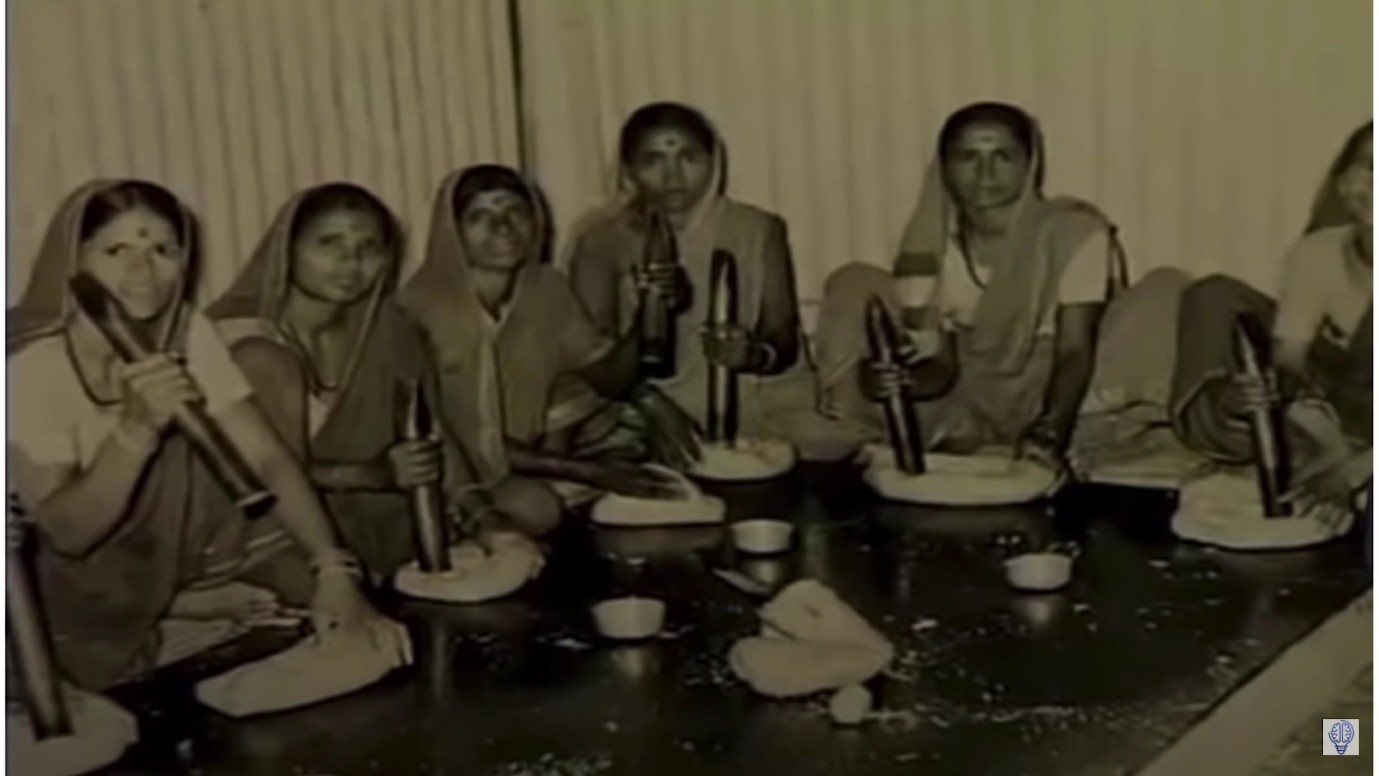
The seven founding sisters of Shri Mahila Griha Udyog Lijjat Papad
At a time when most Indian women had limited opportunities for financial independence, these women decided to start making papads (thin lentil wafers) from home. They borrowed ₹80 from social worker Chhaganlal Parekh to purchase raw materials and began production.
The first day produced only four packets of papad. Yet those four packets laid the foundation for one of India's most inspiring business success stories.
Unlike conventional businesses, the founders were driven by a social mission rather than profit alone. Three principles anchoring the company:
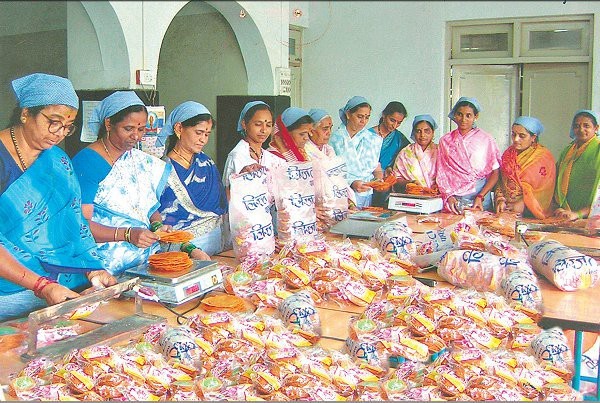
This philosophy became the cornerstone of Lijjat's cooperative model and distinguished it from countless other small businesses.
The quality of the papads quickly attracted customers. Within a few years, more women joined the initiative. In 1962, the organization formally adopted the brand name "Lijjat," a Gujarati word meaning "tasty" or "delicious." The name was selected through a contest.
Sales soon crossed ₹1.8 lakh annually, a significant achievement for a home-based enterprise of that era. As demand increased, production expanded beyond Girgaum to other parts of Mumbai and later across India.
The cooperative formally registered itself under the Societies Registration Act in 1966 and gained recognition under the Khadi and Village Industries framework.
One of the most fascinating aspects of Lijjat Papad is its operating model. Instead of building large, centralized factories, the organization created a decentralized production network.
Every morning:
This model allowed women to earn while managing household responsibilities, making employment accessible even to those who could not work outside the home.
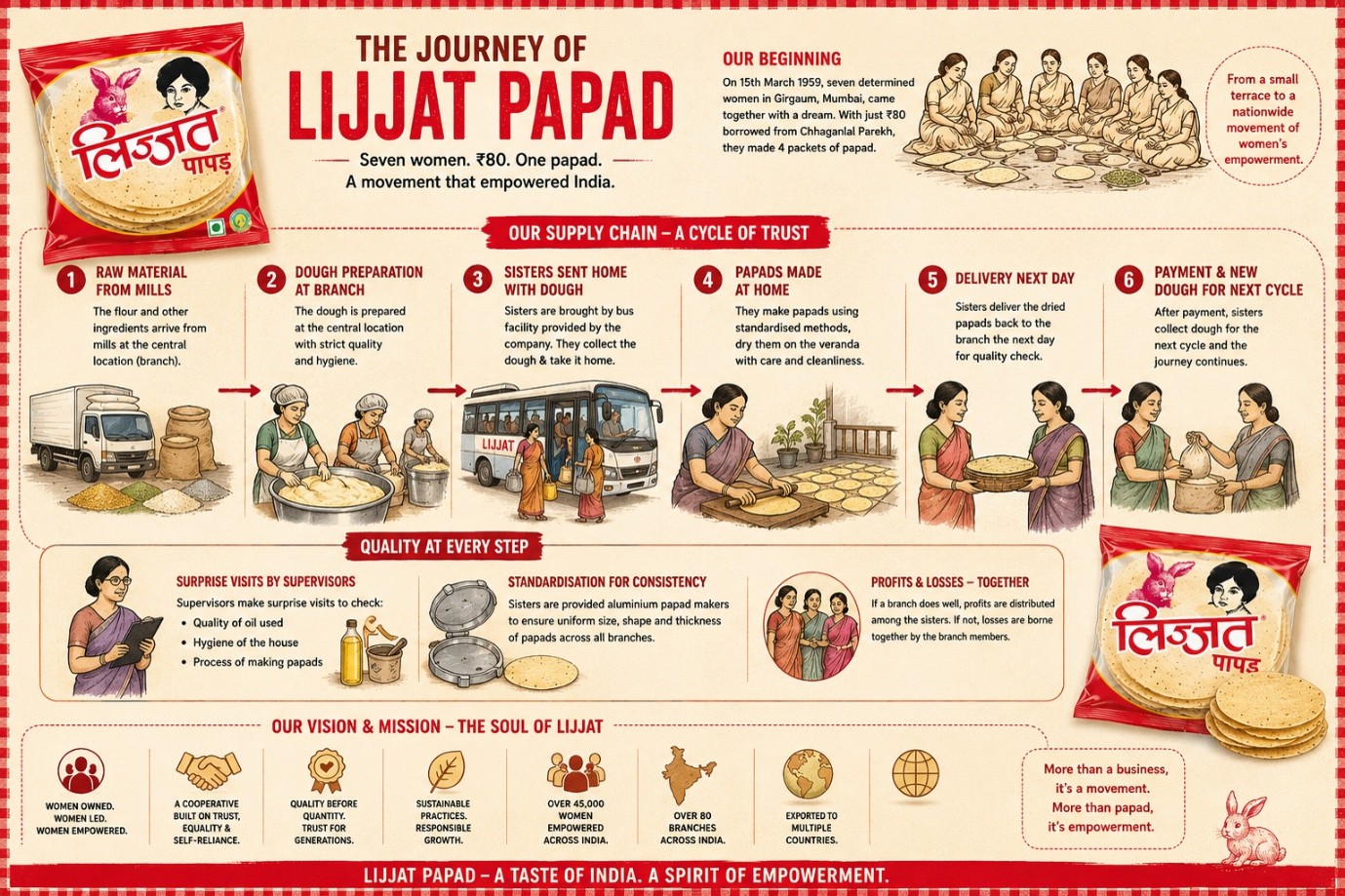
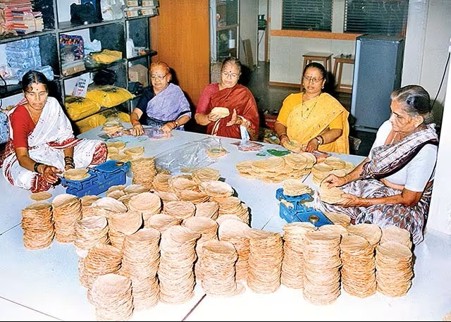
Lijjat's founders understood that social purpose alone would not ensure success. Quality became non-negotiable for the brand. Every batch undergoes inspection, and defective papads are rejected. The organization developed strict quality-control standards long before quality certifications became common among Indian SMEs. This relentless focus on consistency helped build customer trust across generations.
How can we forget the iconic rabbit mascot of Lijjat Papad?

"Mehmaon ko khush kar jaye
Kharram Khurram
Mazedaar, lazzatdaar
Swaad swaad mein lijjat papad
Sek ke khayein
Tal ke khayein…
Khurram Kharram"
Ramdas Padhye, a ventriloquist, puppeteer and puppet maker created this bunny character. Beginning in the 1980s, the brand's advertising campaigns featuring a white rabbit became instantly recognisable across India. The memorable jingle and mascot transformed Lijjat from a regional product into a national household name. For millions of Indians growing up in the 1980s and 1990s, the rabbit became synonymous with papad itself.
As demand surged, Lijjat expanded rapidly. The organisation established branches across multiple states, allowing local women to join the cooperative and earn income close to their homes. The enterprise generates an annual turnover of over ₹1,600 crore and provides self-employment and income to approximately 45,000 women members across India.
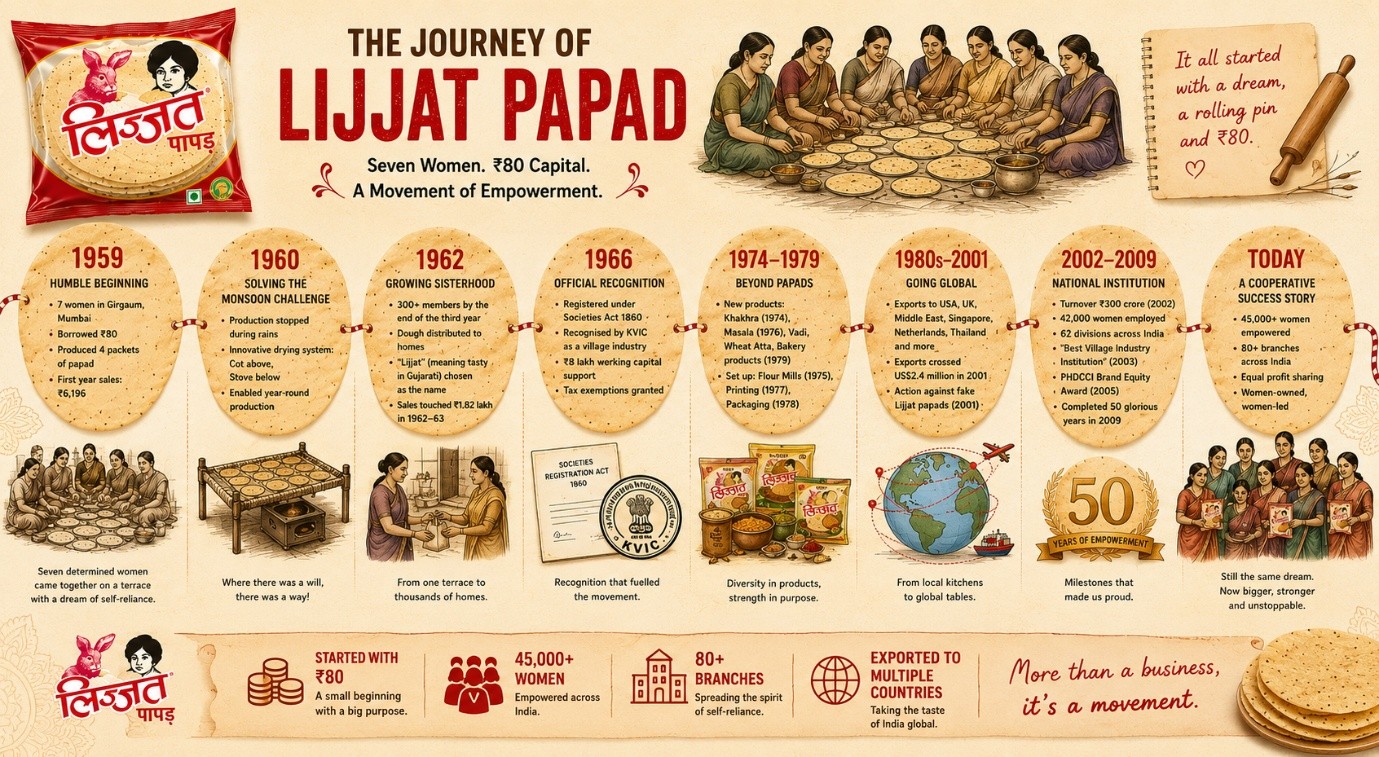
Today, the cooperative operates through more than 80 branches and engages approximately 45,000 women members across India. These women are referred to as "sisters" rather than workers, reflecting the cooperative's philosophy of shared ownership.
The business is best known for its hand-rolled papads (Urad, Garlic, and Punjabi Masala), but also produces other goods like masalas (spices), gehu atta (wheat flour), chapatis, detergent powder, and liquid soaps.
Lijjat's success was not limited to India. The cooperative entered international markets and began exporting products to countries such as United States, United Kingdom, Singapore, Middle East markets and other global destinations.
Its exports demonstrated that a women-led cooperative from India could compete internationally while maintaining traditional production methods and social values.
The true success of Lijjat cannot be measured merely by revenue or geographic reach. Its greatest achievement lies in transforming the lives of thousands of women.
For many members:
Many members earn enough to support their families, and some reportedly earn more than their spouses, fundamentally changing gender dynamics within households.
A remarkable feature of Lijjat is its leadership philosophy. The organization believes that leaders should emerge from the ranks of working members.
As President Swati Paradkar famously explained, only someone who understands the work and has rolled papads can aspire to lead the organization.
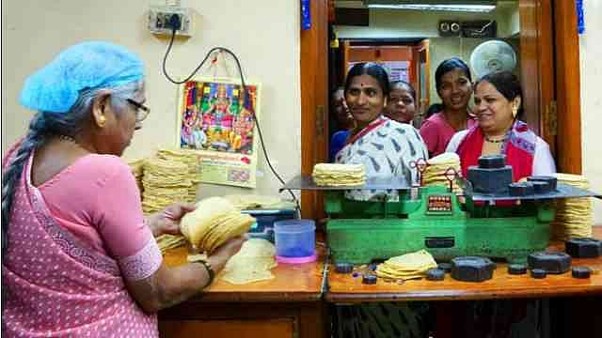
Swati Paradkar, President of Lijjat Papad
This principle ensures that leadership remains grounded in the cooperative's original mission.
The story of Lijjat Papad is not merely a business success story; it is a story of social transformation. Seven women with ₹80, a rolling pin, and a belief in self-reliance created a movement that empowered tens of thousands of women across India. In an era obsessed with venture capital and startup valuations, Lijjat remains a powerful reminder that sustainable businesses can be built on cooperation, dignity, and shared prosperity.
More than six decades after those first four packets of Papad were produced on a Mumbai terrace, Lijjat continues to demonstrate that entrepreneurship is not just about creating wealth—it is about creating opportunity, empowerment, and lasting social change.

2024/08/26

